Researcher Information

KAWASAKI Morimichi

Associate Professor

Studying spaces from the view of their transformation groups.

Department of Mathematics, Mathematics
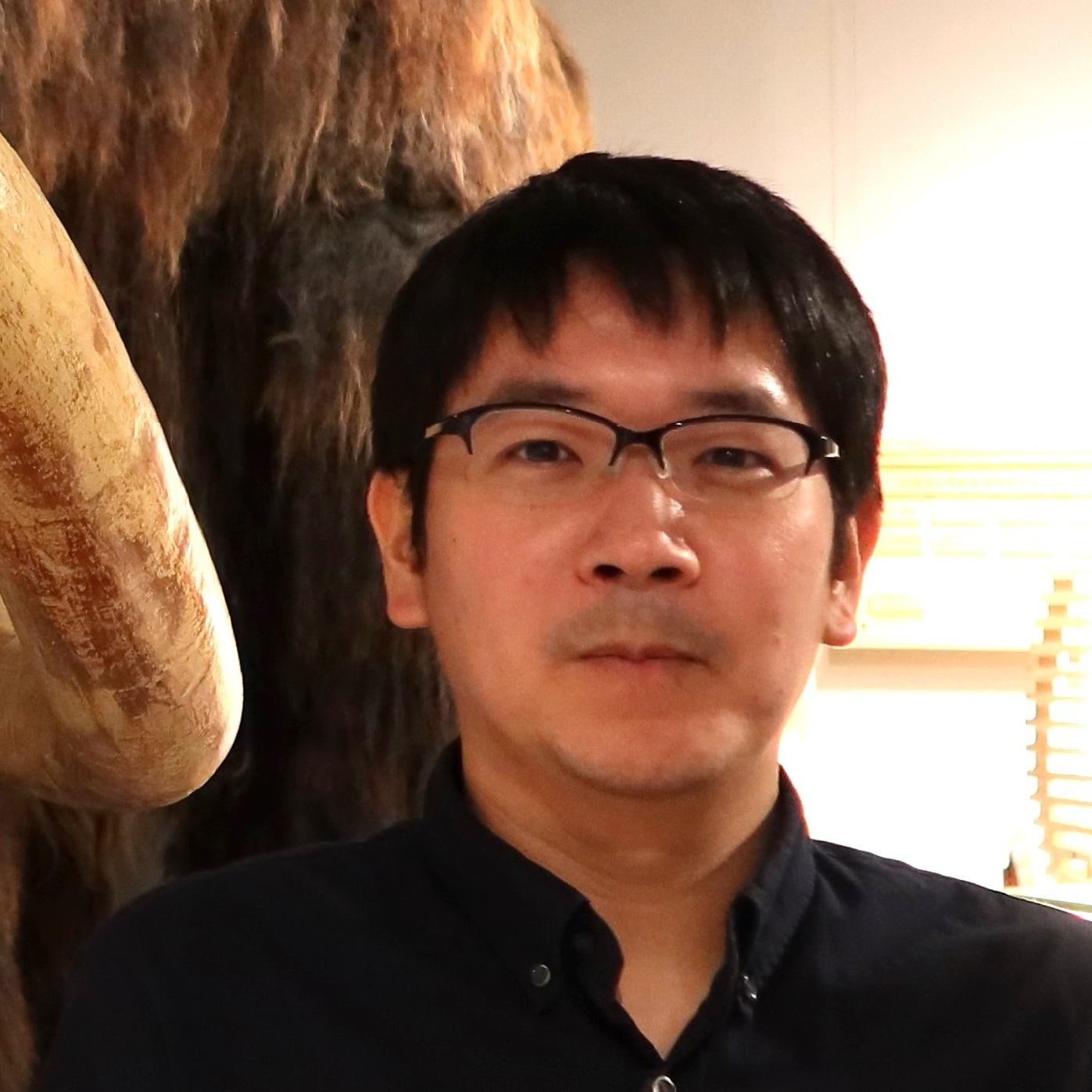
basic_photo_1
Theme

Researching on (Hamiltonian) Dynamical Systems on Symplectic Manifolds from the view of Group-Theoretic and Geometric Properties of the group of Hamiltonian diffeomorphisms.

FieldSymplectic geometry, Contact geometry, Topology, Geometric group theory
KeywordSymplectic Geometry, The group of Hamiltonian diffeomorphisms, Hamiltonian dynamical systems, (Partial) quasi-morphism, Calabi partial quasi-morphism, (Partial) quasi-states, Oh--Schwarz spectral invariants, Bounded cohomology

Introduction of Research

My main reseaerch interest is symplectic geometry. Symplectic geometry has historical roots in Hamiltonian systems in classical mechanics and has gained recent attention for its connections with various other fields.

I am particularly interested in studying the metric and group structures of the group of Hamiltonian diffeomorphisms, which is one of the transformation groups of a symplectic manifold. Additionally, I research their applications, such as non-displaceable fibers in integrable systems, and I am also interested in applying group-theoretic arguments used to study the group of Hamiltonian diffeomorphisms to other transformation groups like the contact diffeomorphism group and the diffeomorphism group.

Representative Achievements

Relative quasimorphisms and stably unbounded norms on the group of symplectomorphisms of the Euclidean spaces, J. Symplectic Geom. 14 (2016), no. 1, 297--304.
Rigid fibers of integrable systems on cotangent bundles (joint work with Ryuma Orita), J. Math. Soc. Japan 74 (2022), no. 3, 829--847.
Commuting symplectomorphisms on a surface and the flux homomorphism (joint work with Mitsuaki Kimura, Takahiro Matsushita, Masato Mimura), arXiv:2102.12161, to appear in Geom. Funct. Anal.
Self Introduction

I am from Kagoshima.

Academic background2011: Graduated from the Department of Mathematics, Faculty of Science, the University of Tokyo.
2013: Completed the Master's Program in Mathematical Sciences, Graduate School of Mathematical Sciences, the University of Tokyo.
2016: Completed the Doctoral Program in Mathematical Sciences, Graduate School of Mathematical Sciences, the University of Tokyo.
2013-2016: Japan Society for the Promotion of Science (JSPS) Research Fellow (DC1), Graduate School of Mathematical Sciences, the University of Tokyo.
2016-2018: Research Fellow at IBS Center for Geometry and Physics.
2018-2021: Japan Society for the Promotion of Science (JSPS) Research Fellow (PD), Research Institute for Mathematical Sciences, Kyoto University.
2021-2023: Assistant Professor in the Department of Mathematical Sciences (formerly Department of Physics and Mathematics), Faculty of Science and Engineering, Aoyama Gakuin University.
2023-Present: Associate Professor in the Mathematics Division, Institute for the Advancement of Higher Education, Hokkaido University.
Room addressScience Building 4

Department of Mathematics, Mathematics

KAWASAKI Morimichi

Associate Professor

basic_photo_1
What is the research theme that you are currently focusing on?

My specialty is geometry, and I am specifically researching “symplectic geometry.” Geometry is a field of mathematics primarily concerned with shapes and space. Among its branches, symplectic geometry has its roots in physics. Modern geometry is largely divided into topology and differential geometry, and symplectic geometry relates to both of them.
Within this field, I have a strong interest in “transformation groups.” A transformation group is an algebraic formulation of “the entirety of flows on a space.” By viewing this from algebraic and geometric perspectives, I am exploring whether it can be applied to dynamical systems on symplectic manifolds.
The geometry studied in university mathematics departments differs from high school geometry problems; it deals with abstract and high-dimensional objects, so they cannot be easily drawn in simple pictures. Therefore, it is necessary to use logic to strictly define and prove them. However, through this process, we cultivate and refine our geometric intuition―our “geometric imagery.” As we go back and forth between logic and imagery, the object of our research gradually becomes “visible.” That process is fascinating.

basic_photo_1
What made you decide to become a researcher?

One of the things that sparked my love for mathematics was “Kumon,” which I attended from elementary school. Although it was just calculation, I enjoyed solving problems from advanced grade levels entirely in my head―even though the classroom policy discouraged mental arithmetic! Since I didn’t do much other math study, I was completely lost when it came to the arithmetic word problems typical of middle school entrance exams (like the “chicken-and-rabbit” problem). However, by the time I was in fifth grade, I could solve systems of linear equations mentally.
When I first entered university, however, I was more interested in applying mathematics to the real world. My alma mater, the University of Tokyo, has a system similar to Hokkaido University’s “General Science” track, where students choose their major after enrollment. While I liked math and was good at it, I hesitated to go into the Department of Mathematics to study “pure mathematics”―meaning math that doesn’t concern itself with applications.
But after actually taking university math classes, I realized that I could only truly “accept” mathematics through rigorous logical arguments. For example, physics classes utilize advanced mathematics, but when I was told “we calculate it this way” without rigorous definitions, I just couldn’t feel convinced. Hearing that I could still study applied mathematics within the Mathematics Department also pushed me to enroll there.
Because of this, I still planned to pursue applied mathematics even after joining the department. However, in my third year, I read “Morse Theory” by the mathematician John Milnor and was captivated by the fascination of modern geometry. From then on, I began to prioritize the intrinsic interest of mathematics over its real-world applications, and before I knew it, I had become a researcher in pure mathematics.

basic_photo_1
Please tell us your stories until you became a researcher.

When I was a graduate student, I spent a few months in Tel Aviv, Israel, for a research stay. While my main purpose was, of course, to interact with researchers in my field, I also took time to go sightseeing. I have always loved the history of the ancient Near East, so I enjoyed visiting ancient ruins. However, I found the modern historical sites and museums related to the founding of the modern State of Israel to be equally intriguing.
Israel is a nation-state established in the modern era by Jewish people who had been scattered across the globe. It possesses a long tradition stemming from the Bible, yet at the same time, it is a state that was “artificially” founded in the modern age based on the concept of the “nation-state.” It was a valuable experience for me to feel this duality of the nation firsthand.
A few years ago, I read The Virtue of Nationalism by the Israeli political philosopher Yoram Hazony with great interest. I believe that such unique political thought emerges precisely from the unique nature of Israel as a country.
I would encourage readers to experience life abroad while they are still young.